C++ is a high-level, general-purpose programming language that was developed as an extension of the C programming language. It is often referred to as "C with Classes" because it added Object-Oriented Programming (OOP) capabilities to the efficiency and speed of C.
The story of C++ begins in the late 1970s at AT&T Bell Labs in Murray Hill, New Jersey.
C++ was created by Bjarne Stroustrup. Stroustrup was working on his Ph.D. thesis and found that while the language Simula had excellent features for software development (like objects), it was too slow for practical use. On the other hand, C was very fast but too low-level for managing complex software projects.
In 1979, he began working on "C with Classes". His goal was to add object-oriented features to C without sacrificing its speed or portability.
In 1983, the name of the language was changed from "C with Classes" to C++. The name was coined by Rick Mascitti. The ++ operator in C means "increment," signaling that C++ was an enhanced, incremented version of C.
As the language grew in popularity, the need for a standard version became clear.
C++98: The first international standard was published in 1998.
C++03: A minor update to fix bugs in the 1998 standard.
Modern C++ (C++11, C++14, C++17, C++20, C++23): C++11 was a massive turning point, introducing features like auto, lambda expressions, and smart pointers, making the language much easier to use and more memory-safe.
C++ is a multi-paradigm language, meaning it supports different styles of programming: Procedural, Object-Oriented, and Generic.
This is the most significant feature that distinguishes C++ from C. It follows four main pillars:
Encapsulation: Grouping data and functions into a single unit (class) to hide the internal state.
Abstraction: Hiding complex implementation details and showing only the necessary features.
Inheritance: Allowing a new class (child) to acquire the properties of an existing class (parent).
Polymorphism: Allowing one interface to be used for different underlying data types (e.g., a "Shape" function that works for circles and squares).
C++ is considered a middle-level language because it bridges the gap between low-level languages (like Assembly or C, which interact directly with hardware) and high-level languages (like Java or Python, which are more human-readable).
The Standard Template Library (STL) is one of C++'s greatest strengths. It provides a massive collection of pre-written code for:
Containers: Vectors, Lists, Queues, Stacks.
Algorithms: Sorting, Searching, Merging.
Iterators: Tools to move through collections of data.
Because C++ is a compiled language (translated directly into machine code) and allows for direct memory manipulation, it is incredibly fast. This is why it is used for performance-critical applications like AAA video games, operating systems, and high-frequency trading.
C++ gives the programmer total control over memory. Using the new and delete operators, you can allocate memory on the "Heap" during runtime. While powerful, this requires the programmer to be careful to avoid memory leaks.
| Feature | C Programming | C++ Programming |
| Paradigm | Procedural only. | Procedural and Object-Oriented. |
| Approach | Top-down approach. | Bottom-up approach. |
| Data Security | Less secure (no encapsulation). | Highly secure (access specifiers). |
| Functions | No function overloading. | Supports function & operator overloading. |
| Namespace | Not available (naming conflicts). | Uses namespaces to avoid conflicts. |
Even though newer languages exist, C++ remains a "top-tier" language for specific industries:
Game Development: Engines like Unreal Engine are built entirely on C++.
Operating Systems: Significant parts of Windows, macOS, and Linux are written in C++.
Browsers: Google Chrome, Firefox, and Safari use C++ for their rendering engines.
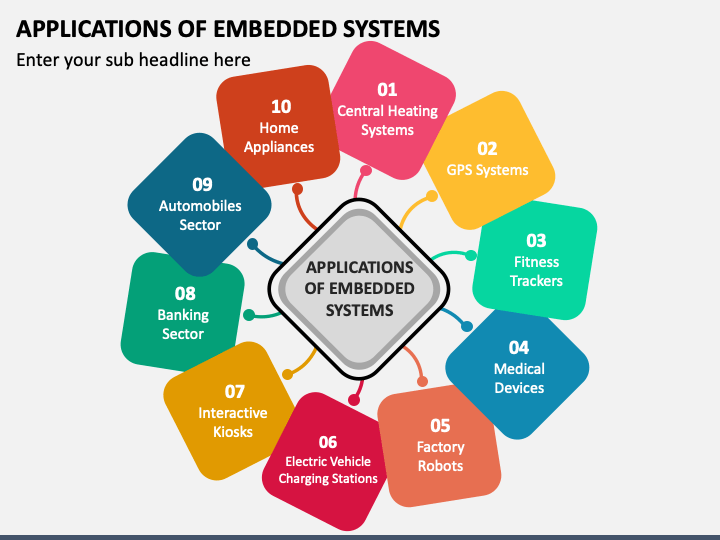
Embedded Systems: Medical devices, flight control systems, and automotive computers rely on C++'s speed and reliability.
Copyright ©2025. All Rights Reserved Emblab THE RAVE INNOVATION